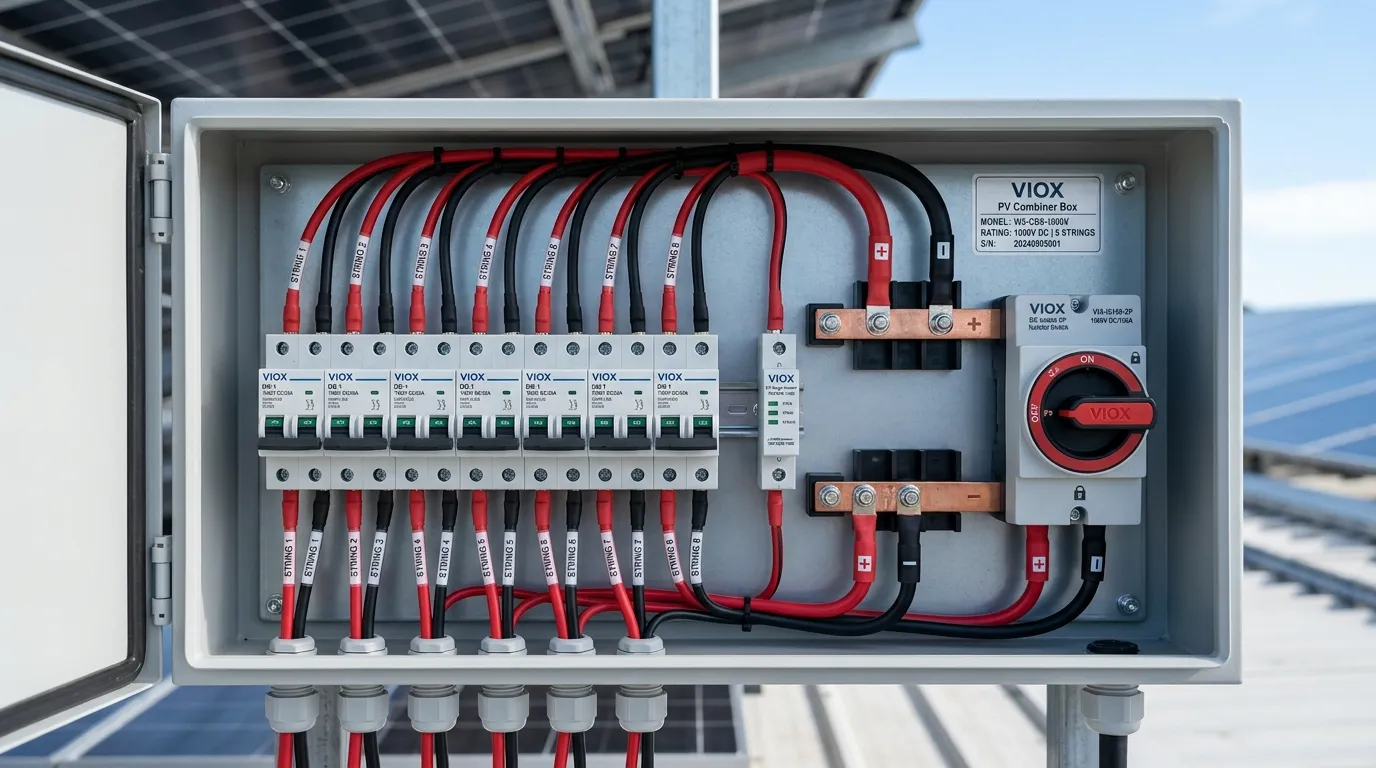
ဆိုလာပေါင်းစပ်သေတ္တာတစ်ခုစီ၏အတွင်းပိုင်းတွင် DC switching devices နှစ်မျိုးကို ထပ်ခါထပ်ခါတွေ့ရပြီး ၎င်းတို့ကို မူလအားဖြင့် အပြန်အလှန်အသုံးပြု၍မရပါ။ A DC isolator သည် စနစ်ကို လုံခြုံစွာပြုပြင်နိုင်ရန်အတွက် manual, intentional isolation ကိုပေးရန်အတွက် အဓိကထားရှိပါသည်။ A DC circuit breaker သည် overcurrent သို့မဟုတ် short-circuit အခြေအနေများကိုရှာဖွေပြီး circuit ကိုအလိုအလျောက်အနှောက်အယှက်ပေးရန်အတွက် အဓိကထားရှိပါသည်။.
၎င်းတို့သည် မတူညီသောအန္တရာယ်များကို ကိုင်တွယ်ဖြေရှင်းသည်။ ၎င်းတို့သည် ကာကွယ်ရေးအဆင့်ဆင့်၏ မတူညီသောအစိတ်အပိုင်းများတွင် တည်ရှိသည်။ ဒီဇိုင်နာများသည် ၎င်းတို့ကြားရှိမျဉ်းကြောင်းကို မှုန်ဝါးစေသောအခါ ရလဒ်သည် စာရွက်စာတမ်းပြဿနာအသေးအမွှားတစ်ခုမဟုတ်ပါ။ ၎င်းသည် nuisance trips များ၊ အားနည်းသော fault protection၊ ခက်ခဲသောပြုပြင်ထိန်းသိမ်းမှုလုပ်ထုံးလုပ်နည်းများ သို့မဟုတ် enclosure အတွင်း၌ DC arcing ကို ထိန်းထားခြင်းအဖြစ် ပေါ်လာသည်။.
ဤလမ်းညွှန်သည် PV ပေါင်းစပ်သေတ္တာတွင် မည်သည့်ကိရိယာတစ်ခုစီရှိသင့်ကြောင်း၊ အဘယ်ကြောင့်သေတ္တာများစွာတွင် နှစ်ခုစလုံးလိုအပ်ကြောင်း ရှင်းပြထားသည်။ လုပ်ဆောင်ချက်များ, နှင့် မည်သည့်ရွေးချယ်မှုအမှားများသည် တကယ့်ပရောဂျက်များတွင် ထပ်ခါထပ်ခါပေါ်လာနေသနည်း။.
သင်သည် ပိုမိုကျယ်ပြန့်သော enclosure context ကို ဦးစွာလိုချင်ပါက၊ ပေါင်းစပ်သေတ္တာထုတ်ကုန်စာမျက်နှာ သို့မဟုတ် ရှင်းလင်းချက်ကို စတင်ပါ။ ဆိုလာပေါင်းစပ်သေတ္တာက ဘာလုပ်သလဲ. ဤဆောင်းပါးသည် သေတ္တာအတွင်းရှိ ကိရိယာအခန်းကဏ္ဍနယ်နိမိတ်ကို အဓိကထားသည်။.
တိုက်ရိုက်အဖြေ
တဲ့ DC isolator သည် manual isolation နှင့် safe disconnection အတွက်ဖြစ်သည်။. A DC circuit breaker သည် automatic overcurrent interruption.
PV ပေါင်းစပ်သေတ္တာများတွင်၊ ယင်းသည် များသောအားဖြင့်-
- အဓိက isolator လုပ်ဆောင်ချက် ပြုပြင်ထိန်းသိမ်းမှု၊ lockout နှင့် local disconnection ကို အထောက်အပံ့ပေးသည်။
- အဓိက breaker function fault အခြေအနေများအောက်တွင် string သို့မဟုတ် feeder protection ကို အထောက်အပံ့ပေးသည်။
ကိရိယာတစ်ခုသည် ၎င်း၏စာရင်း၊ အမှတ်အသားနှင့် အသုံးချမှုက ခွင့်ပြုပါက တစ်ခါတစ်ရံ လိုအပ်ချက်တစ်ခုထက်ပို၍ ဖြည့်ဆည်းပေးနိုင်သည်။ သို့သော် ဒီဇိုင်နာများသည် breaker သည် isolator ကို အလိုအလျောက်အစားထိုးသည် သို့မဟုတ် isolator သည် overcurrent protection ကို တစ်နည်းနည်းဖြင့် အစားထိုးသည်ဟု ယူဆချက်မှ စတင်လုပ်ဆောင်သင့်သည်။.
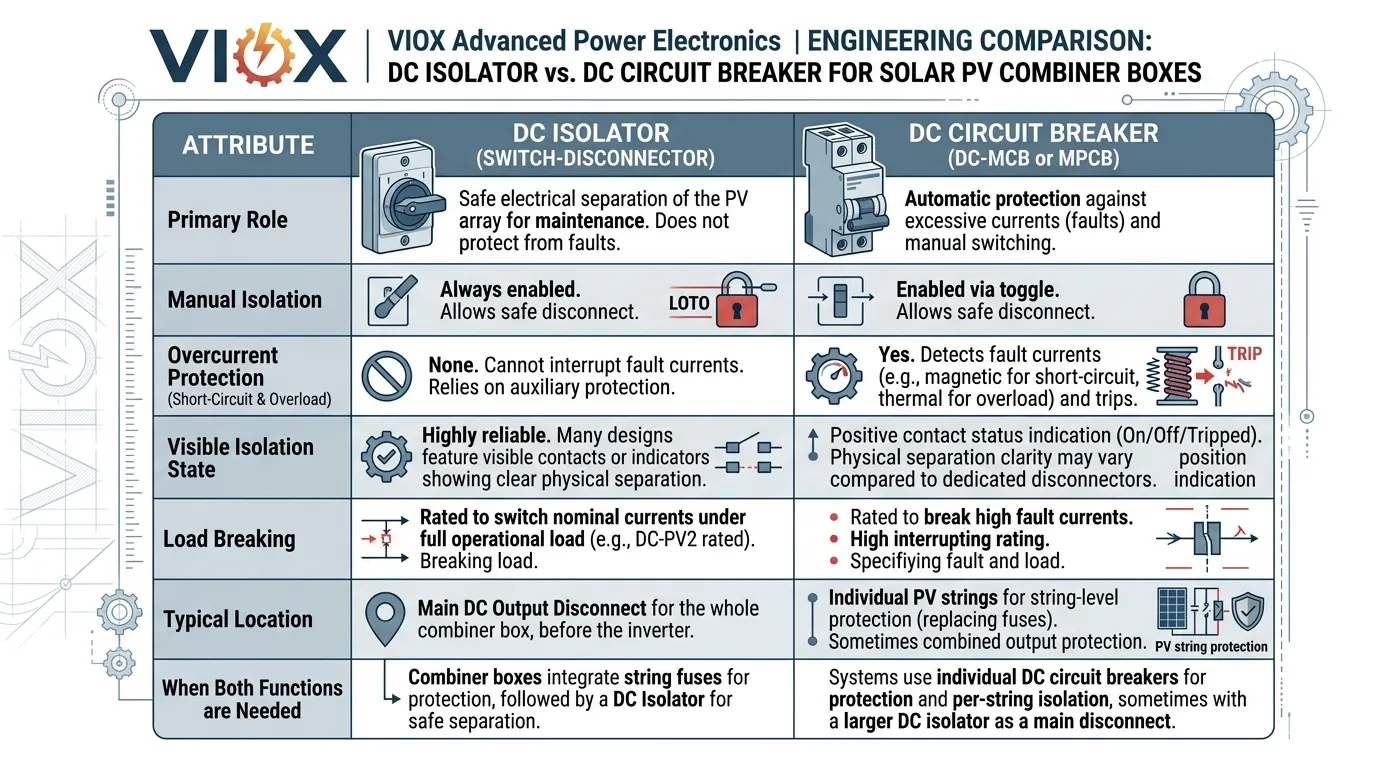
အဓိက နှိုင်းယှဉ်ချက်- ပေါင်းစပ်သေတ္တာရှိ DC Isolator နှင့် DC Circuit Breaker
| အင်္ဂါ | DC Isolator | DC Circuit Breaker |
|---|---|---|
| အဓိကအခန်းကဏ္ဍ | Manual disconnection နှင့် ပြုပြင်ထိန်းသိမ်းမှု isolation | Automatic overcurrent နှင့် short-circuit protection |
| Manual isolation | ဟုတ်ကဲ့၊ ဤသည်မှာ အဓိကရည်ရွယ်ချက်ဖြစ်သည်။ | တစ်ခါတစ်ရံ ဖြစ်နိုင်သော်လည်း ၎င်းကို သတ်မှတ်ရန် ပထမဆုံးအကြောင်းပြချက်မဟုတ်ပါ။ |
| Overcurrent ကာကွယ်မှု | တစ်ခုမှ | ဟုတ်ကဲ့ |
| Isolation ညွှန်ပြချက် | များသောအားဖြင့် ရှင်းလင်းပြတ်သားသော switching position နှင့် lockable service state ကို ပေးသည်။ | Handle position သည် သီးသန့် isolator ကဲ့သို့ ပြုပြင်ထိန်းသိမ်းမှု ယုံကြည်မှုကို အမြဲမပေးနိုင်ပါ။ |
| Load breaking capability | switch-disconnector rating နှင့် PV DC duty ပေါ်တွင်မူတည်သည်။ | breaker ဒီဇိုင်း၊ DC rating နှင့် interrupting duty ပေါ်တွင်မူတည်သည်။ |
| ပေါင်းစပ်သေတ္တာတွင် ပုံမှန်တည်နေရာ | ပေါင်းစပ်ထားသော output သို့မဟုတ် local disconnect point တွင် မကြာခဏရှိသည်။ | ဗိသုကာပေါ်မူတည်၍ string level, string-group level သို့မဟုတ် combined-output protection point တွင်ရှိသည်။ |
| နှစ်ခုစလုံးလိုအပ်သည့်အခါ | သေတ္တာသည် လုံခြုံသော manual isolation နှင့် automatic fault protection နှစ်ခုစလုံးလိုအပ်သည့်အခါ | အတူတူ |
အဓိကအချက်မှာ ရိုးရှင်းပါသည်- isolator သည် အဓိကအားဖြင့် လူများနှင့် ဝန်ဆောင်မှုလုပ်ငန်းအတွက် ထိန်းချုပ်ထားသော disconnection. ဖြစ်သည်။ breaker သည် အဓိကအားဖြင့် လည်ပတ်နေစဉ်အတွင်း ကာကွယ်ရေးဆိုင်ရာ နှောင့်ယှက်မှု.
ဖြစ်သည်။ ပေါင်းစပ်သေတ္တာတစ်ခုသည် အဘယ်ကြောင့် လုပ်ဆောင်ချက်နှစ်ခုစလုံးကို မကြာခဏလိုအပ်သနည်း။
PV ပေါင်းစပ်သေတ္တာသည် DC output ကို inverter သို့မဟုတ် အခြားစုဆောင်းသည့်နေရာသို့ မပို့လွှတ်မီ ကြိုးများစွာကို စုစည်းပေးသည်။ ၎င်းသည် မတူညီသော ဒီဇိုင်းမေးခွန်းနှစ်ခုကို ဖန်တီးပေးသည်-
ပြဿနာ ၁- Fault နှင့် Reverse-Current ထိတွေ့မှု
ကြိုးများစွာကို parallel ချိတ်ဆက်ထားသောအခါ၊ faulted string သည် ကျန်းမာသောကြိုးများမှ reverse current နှင့် ထိတွေ့နိုင်သည်။ ထို့ကြောင့် string ဗိသုကာနှင့် code framework က လိုအပ်သည်နှင့်တပြိုင်နက် overcurrent protection သည် မရှိမဖြစ်လိုအပ်လာသည်။ NEC-based ဒီဇိုင်းတွင်၊ ဤဆွေးနွေးချက်သည် 690.9 Overcurrent Protection. နှင့် ချိတ်ဆက်ထားသည်။ IEC-based ဒီဇိုင်းတွင်၊ PV arrays အတွက် source-circuit protection စည်းမျဉ်းများတွင် တူညီသောယုတ္တိဗေဒကို တွေ့ရသည်။.
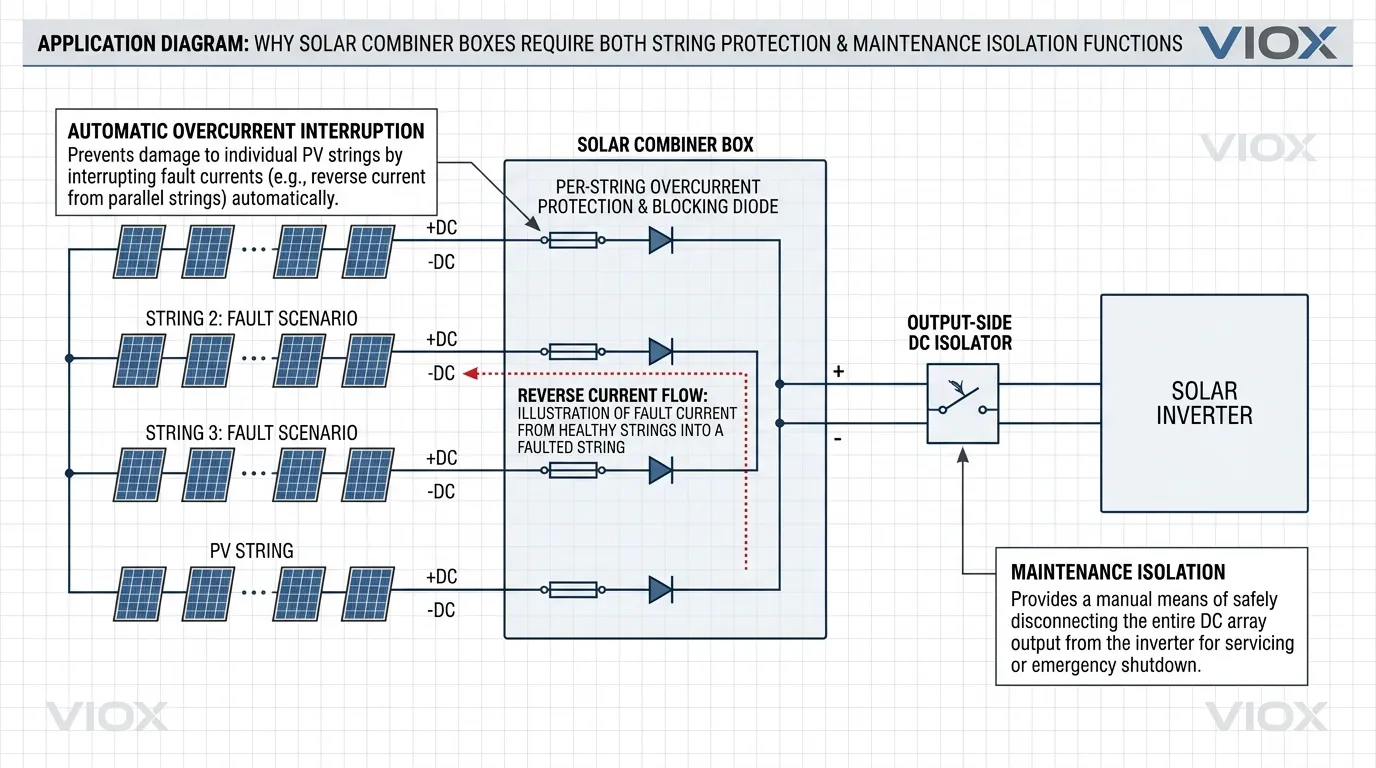
ထို overcurrent အခန်းကဏ္ဍကို ဤအရာများဖြင့် ကိုင်တွယ်ဖြေရှင်းနိုင်သည်-
- string fuses
- DC breakers များ
- ပရောဂျက်စံနှုန်းဖြင့် လက်ခံထားသော အခြားကာကွယ်ရေးအစီအစဉ်
အစွန်အဖျား: NEC-style PV ဒီဇိုင်းတွင်၊ လျင်မြန်သောအင်ဂျင်နီယာစစ်ဆေးမှုမှာ faulted circuit ထိတွေ့မှုကို ကျန်ရှိသော parallel ကြိုးများမှရရှိနိုင်သော reverse current နှင့် နှိုင်းယှဉ်ရန်ဖြစ်သည်။ 12-string ပေါင်းစပ်သေတ္တာတွင်၊ faulted string သည် ခန့်မှန်းခြေအားဖြင့် 11 x Isc အခြားကြိုးများမှ ထိတွေ့နိုင်သည်။ ထို့ကြောင့် ဒီဇိုင်နာများသည် ကြိုးတစ်ချောင်းတည်းကို သီးခြားကြည့်ခြင်းဖြင့် ကာကွယ်ရေးအရွယ်အစားကို မဆုံးဖြတ်နိုင်ပါ။.
သင်သည် ပိုမိုကျယ်ပြန့်သော ညှိနှိုင်းမှုပုံရိပ်ကို လိုချင်ပါက၊, ဆိုလာပေါင်းစပ်သေတ္တာ ကာကွယ်ရေးဒီဇိုင်း သည် အနီးစပ်ဆုံး အထောက်အပံ့ပေးသည့် စာမျက်နှာဖြစ်သည်။.
ပြဿနာ ၂- ဝန်ဆောင်မှုအတွက် လုံခြုံသော De-Energization
ကာကွယ်ရေးကိရိယာတစ်ခု လည်ပတ်ပြီးနောက်ပင်၊ ပြုပြင်ထိန်းသိမ်းရေးဝန်ထမ်းများသည် အလုပ်အတွက် သေတ္တာကို သီးခြားခွဲထုတ်ရန် ရည်ရွယ်ချက်ရှိရှိ နည်းလမ်းတစ်ခု လိုအပ်နေသေးသည်။ နေရောင်ခြည်ရရှိနိုင်သည့်အခါတိုင်း ဆိုလာ module များသည် ဗို့အားကို ဆက်လက်ထုတ်လုပ်နေသည်။ ဆိုလိုသည်မှာ ဝန်ဆောင်မှုလုပ်ထုံးလုပ်နည်းသည် trip event တစ်ခုတည်းမဟုတ်ဘဲ သင့်လျော်သော disconnecting means တစ်ခု လိုအပ်နေသေးသည်။.
In U.S. practice, that is tied to NEC 690.13 and related disconnecting-means requirements. In IEC-based projects, the same expectation shows up through PV isolation requirements such as IEC 60364-7-712. In Australia and New Zealand, AS/NZS 5033 is even more explicit about the role and placement of PV DC isolators.
အစွန်အဖျား: Isolation selection should also follow the cold-corrected open-circuit voltage, not just the nominal system label. PV string voltage rises as module temperature falls, so an isolator selected too close to the STC Voc can be under-rated on cold mornings even though it looked acceptable on paper.
The practical conclusion is that many combiner boxes need both:
- တစ်ခု overcurrent-protection function
- တစ်ခု isolation / disconnect function
Those functions may sit in separate devices, or in some cases be satisfied by a suitably rated and accepted device arrangement. But they should not be treated as the same job.
How They Work Together in Practice
Consider a combiner box in a commercial or utility-scale PV installation with multiple strings entering a common bus.
The overcurrent devices at string level or group level are there to limit fault exposure and keep one abnormal circuit from damaging the rest of the array wiring. The output isolator or disconnecting device is there so a technician can intentionally separate the combiner from the downstream run, lock the switch in a safe position where required, and work on the enclosure with a clearer service procedure.
That separation is not redundant. It is what makes the box workable in the field.
On projects where this distinction is handled well, technicians can:
- identify the faulted string or branch
- operate the protective and disconnecting devices in the right sequence
- isolate the box safely for service
- restore the healthy circuits with less confusion and less downtime
When a DC Isolator Function Is Mandatory
The careful wording matters here.
Most codes do မ say that every project must use one exact product shape labeled “isolator” in every combiner box. What they require is a compliant disconnecting means.
In practice, a dedicated DC isolator or switch-disconnector is often the most straightforward way to satisfy that duty when the project needs:
- a local maintenance disconnect at the combiner output
- a clearly marked service switching point
- a lockable open position
- a device selected mainly for disconnection duty rather than protective tripping
This is why dedicated DC isolators remain common in PV combiner boxes even on systems that already include protective breakers or fuses. The deciding issue is usually not catalog preference. It is whether the maintenance team gets a clearer, safer, and more inspectable isolation point.
If the reader needs the more device-specific background, the natural supporting pages are DC isolator switch နှင့် what is a DC isolator switch.
When a DC Breaker Function Is Mandatory
Overcurrent protection is mandatory when the conductors or equipment are exposed to fault current beyond what the circuit can safely withstand.
In PV combiner boxes, this becomes especially important when:
- three or more strings are paralleled under NEC logic
- the project specification calls for resettable overcurrent protection
- the output conductors require a protective device at the combiner
- the design needs a monitoring-friendly, resettable alternative to fuse-only protection
The reason a DC breaker is specified is not that it has a handle. It is that the circuit needs automatic fault interruption under DC conditions.
For a breaker-only deep dive, the most relevant supporting pages are a practical guide to DC circuit breakers နှင့် DC circuit breaker sizing: NEC 690 vs IEC 60947-2.
Can One Replace the Other?
Not by assumption.
A DC isolator does not replace a DC breaker when overcurrent protection is required
An isolator does not detect overcurrent, does not trip automatically, and should not be treated as the device that clears a developing fault simply because it can be opened manually.
A DC breaker does not automatically replace a dedicated isolator
A breaker may be accepted as a disconnecting means in some projects, but the designer still has to verify:
- listing and marking
- DC application suitability
- whether the open position can be clearly identified and locked where required
- whether the maintenance procedure remains safe and practical
This is why the better engineering question is not “which one wins?” It is “does this design still provide both protection and isolation in a way the code, the inspector, and the maintenance team will all accept?”
Practical Selection Mistakes in PV Combiner Boxes
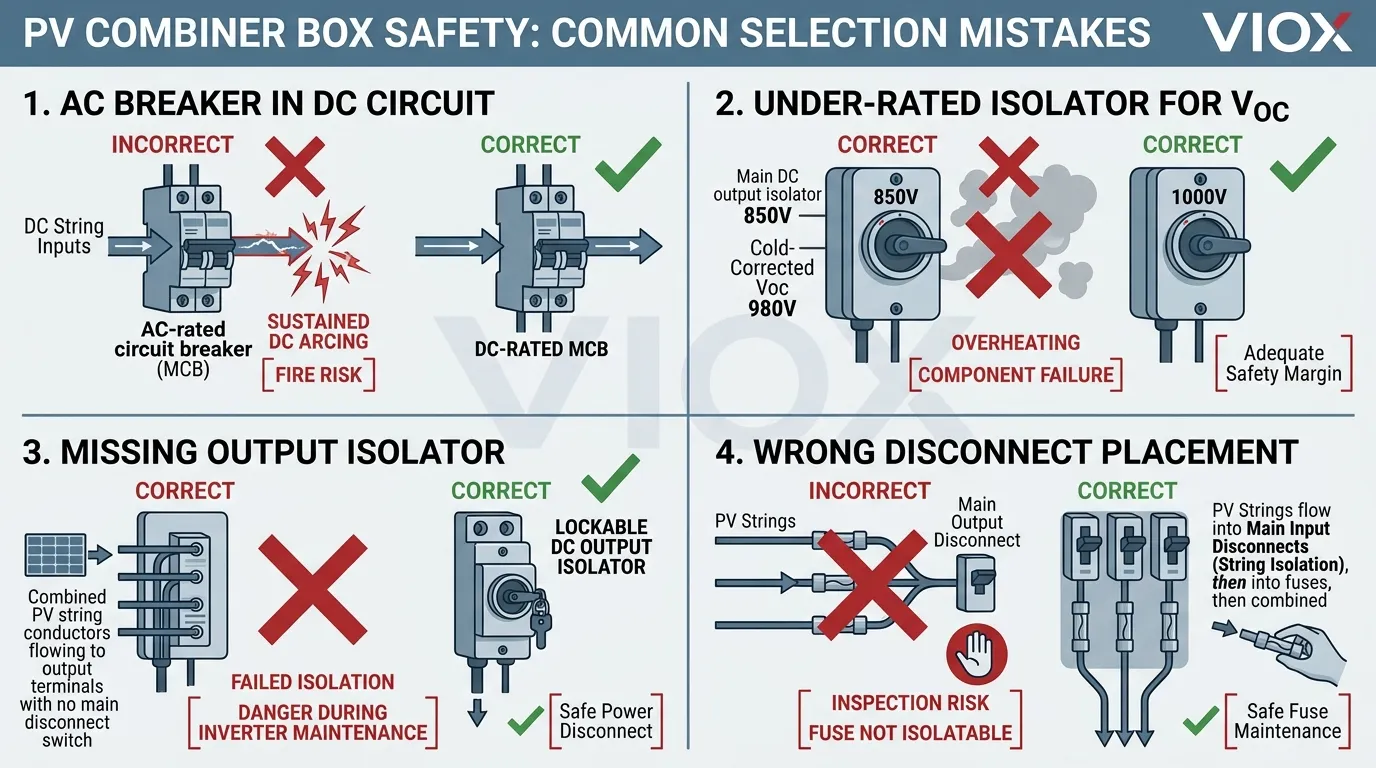
1. Using AC-Rated Devices in a DC PV Circuit
This remains one of the most dangerous mistakes in the field. DC interruption is not the same as AC interruption. A device that is comfortable in an AC panel is not automatically suitable for a PV DC combiner box. In AC, the current passes through a natural zero-crossing every cycle, which helps the arc extinguish. In DC, there is no natural zero-crossing. If the device is not designed for DC arc control, the arc can sustain itself across opening contacts.
အကျိုးဆက်- the arc may not self-extinguish, the device can fail to interrupt, and the combiner enclosure can burn.
2. Treating String Breakers as the Whole Protection Strategy
တစ်ကြောင်းချင်းစီရှိသော circuit breaker များသည် disconnecting-means လိုအပ်ချက်ကို အလိုအလျောက် မဖြေရှင်းနိုင်သလို သန့်ရှင်းသော ပြုပြင်ထိန်းသိမ်းမှု လုပ်ငန်းစဉ်ကိုလည်း အလိုအလျောက် မဖန်တီးနိုင်ပါ။.
အကျိုးဆက်- နည်းပညာရှင်များသည် ဝန်အားရှိနေသော bus သို့မဟုတ် ရှုပ်ထွေးသော shutdown sequence ကို ဝန်ဆောင်မှုပေးနေစဉ် ကြုံတွေ့ရနိုင်သည်။.
Output Isolator ကို Overcurrent Protection ကို ဖြေရှင်းပေးနိုင်သည်ဟု မှတ်ယူခြင်း
၎င်းသည် မဖြေရှင်းနိုင်ပါ။ သီးခြား disconnect point နှင့် protective tripping function တို့သည် ဒီဇိုင်း၏ မတူညီသောအလွှာများဖြစ်သည်။.
အကျိုးဆက်- conductor များ၊ terminal များ သို့မဟုတ် enclosure အစိတ်အပိုင်းများ အပူလွန်ကဲသည်အထိ ချို့ယွင်းချက်သည် ဆက်လက်တည်ရှိနိုင်သည်။.
Ampere Rating ဖြင့်သာ ရွေးချယ်ခြင်း
PV combiner box များတွင် voltage class, pole arrangement, DC utilization, interrupting duty, temperature behavior နှင့် actual string architecture အားလုံး အရေးကြီးပါသည်။.
အကျိုးဆက်- ရွေးချယ်ထားသော device သည် nameplate ပေါ်တွင် မှန်ကန်ပုံပေါ်နိုင်သော်လည်း အမှန်တကယ် PV duty အတွက် အဆင့်နိမ့်နေနိုင်သည်။.
Disconnect ကို မှားယွင်းသောနေရာတွင် တပ်ဆင်ခြင်း
ရည်ရွယ်ချက်သည် box တစ်ခုလုံး သို့မဟုတ် downstream isolation ဖြစ်ပါက၊ disconnecting device ကို တပ်ဆင်ထားရမည့်နေရာသည် circuit ၏ ရည်ရွယ်ထားသောအပိုင်းကို အမှန်တကယ် ခွဲထုတ်နိုင်ရမည်။ မှားယွင်းသောနေရာရှိ switch သည် ပြုပြင်ထိန်းသိမ်းရေးအဖွဲ့မှ ဆန့်ကျင်ဘက်ဟု ယူဆသောအခါ bus သို့မဟုတ် downstream conductor များအား ဝန်အားရှိနေစေနိုင်သည်။.
အကျိုးဆက်- စာရွက်ပေါ်တွင် box သည် isolated ဖြစ်ပုံပေါ်နိုင်သော်လည်း အန္တရာယ်ရှိသော voltage သည် field တွင် ရှိနေသေးသည်။.
Project Basis ကို မဖော်ပြဘဲ Code System များကို ရောနှောခြင်း
NEC, IEC နှင့် AS/NZS လိုအပ်ချက်များကို ပရောဂျက်ကို အုပ်ချုပ်သည့် စည်းမျဉ်းအစုကို မဖော်ပြဘဲ တစ်ပြိုင်နက် ကိုးကားသောအခါ ဒီဇိုင်းပြန်လည်သုံးသပ်ခြင်းသည် အလွန်ရှုပ်ထွေးသွားသည်။ ကောင်းမွန်သော စာရွက်စာတမ်းများသည် ထိုအခြေခံကို အမြဲရှင်းလင်းစေသည်။.
အကျိုးဆက်- အဖွဲ့သည် မှားယွင်းသော device set ကို အတည်ပြုနိုင်သည်၊ စစ်ဆေးခြင်းတွင် ကျရှုံးနိုင်သည် သို့မဟုတ် အုပ်ချုပ်သည့်စံနှုန်းနှင့် မကိုက်ညီသော ပြုပြင်ထိန်းသိမ်းမှု လုပ်ထုံးလုပ်နည်းကို ဖန်တီးနိုင်သည်။.
အမြဲမေးလေ့ရှိသောမေးခွန်းများ
Do I need both a DC isolator and a DC breaker in every combiner box?
အမြဲတမ်း သီးခြားရပ်တည်နိုင်သော device နှစ်ခုအနေဖြင့် မဟုတ်သော်လည်း combiner box အများအပြားတွင် နှစ်ခုစလုံး လိုအပ်ပါသည်။ လုပ်ဆောင်ချက်များisolation နှင့် overcurrent protection။ ထိုလုပ်ဆောင်ချက်များကို မည်သို့အကောင်အထည်ဖော်သည်ဆိုသည်မှာ ပရောဂျက် code basis, string architecture နှင့် device သင့်လျော်မှုအပေါ် မူတည်ပါသည်။.
Can a DC breaker serve as the PV disconnecting means?
Sometimes yes, but only when its listing, marking, and installation details support that duty. Engineers should verify this instead of assuming every DC breaker is automatically a compliant isolator.
Can a DC isolator protect against overcurrent or short circuit?
No. A standard isolator is not an overcurrent protective device.
Are string breakers mandatory in every combiner box?
No. The need for string-level overcurrent protection depends on the number of parallel strings, conductor exposure, code framework, and equipment limits. In many projects, string fuses remain the more common solution.
What is the safest way to think about the difference?
isolator ကို ရွေးချယ်ထားသော device အဖြစ် မှတ်ယူပါ။ ရည်ရွယ်ချက်ရှိရှိ ဖြုတ်တောက်ခြင်း breaker ကို ရွေးချယ်ထားသော device အဖြစ် မှတ်ယူပါ။ automatic fault interruption. ထို့နောက် ပရောဂျက်သည် လုပ်ဆောင်ချက်နှစ်ခုစလုံးကို သီးခြားလိုအပ်သေးသလား စစ်ဆေးပါ။.